The Silent Treatment
Deep into the third act of my last book, Shadow Zone, my main character, Andrew Carter, got mad. No, mad isn’t a strong enough word. The man was furious. Tight-lipped, clenching his fists, rage poured off him like heat off a highway. I wasn’t the only one who noticed. My editor and beta-reader wanted to know why Andrew was so angry.
I had no idea.
Believe it or not, this is problem writers often encounter. Fictional characters are a lot like children. You try to shape them. You teach them the lessons you hope will make them the people you want them to be. Ultimately, though, it’s up to them who they become. You can influence them, but you can’t control the outcome.
A good character, a character who is alive, is unpredictable. He, she or they will sometimes dig in their heels and refuse to do what is necessary to keep the story going. It’s not a good idea to force them into moving ‘for the sake of the plot’. If you do, they freeze up. Or worse, they become remote, robotic in their actions. They lose all the qualities the readers like about them.
So, what’s a poor author to do? Well, like a child having a tantrum or a spouse giving you the silent treatment, I waited Andrew Carter out. I gave him time to process his emotions. After a few weeks (time I spent working on other parts of the story), he finally told me why he was so angry. And an amazing thing happened. Once I found out the reason, his behavior changed. He was still angry, but he allowed me to write a much different scene, one tinged by fear and vulnerability. Informed by his concern about his father and his own future. I think it’s the most emotional Andrew Carter has ever been with me.
A few months later, I attended the World Fantasy Conference and brought this up with a panel discussing troublesome characters. A good ten minutes of spirited discussion ensued.
Their advice was exactly what I’d done: to wait the character out, to refuse to force them into doing anything. Then Joe Hill (Stephen King’s son and an amazing writer himself) gave us an additional piece of advice. “Focus on their footsteps. Follow the path they’ve taken from the beginning of the story, and where they stop will tell you what’s going on, even if they won’t.”
When I got home, I re-read the story. And darn it if Joe Hill wasn’t right. The place where Andrew Carter stopped made perfect sense, given what he was going through. If I had been more sensitive to my character (and less concerned with getting the book finished), I would have understood his hesitation. And his anger.
It’s guidance I plan to use on all my future journeys with Andrew and Ellen.
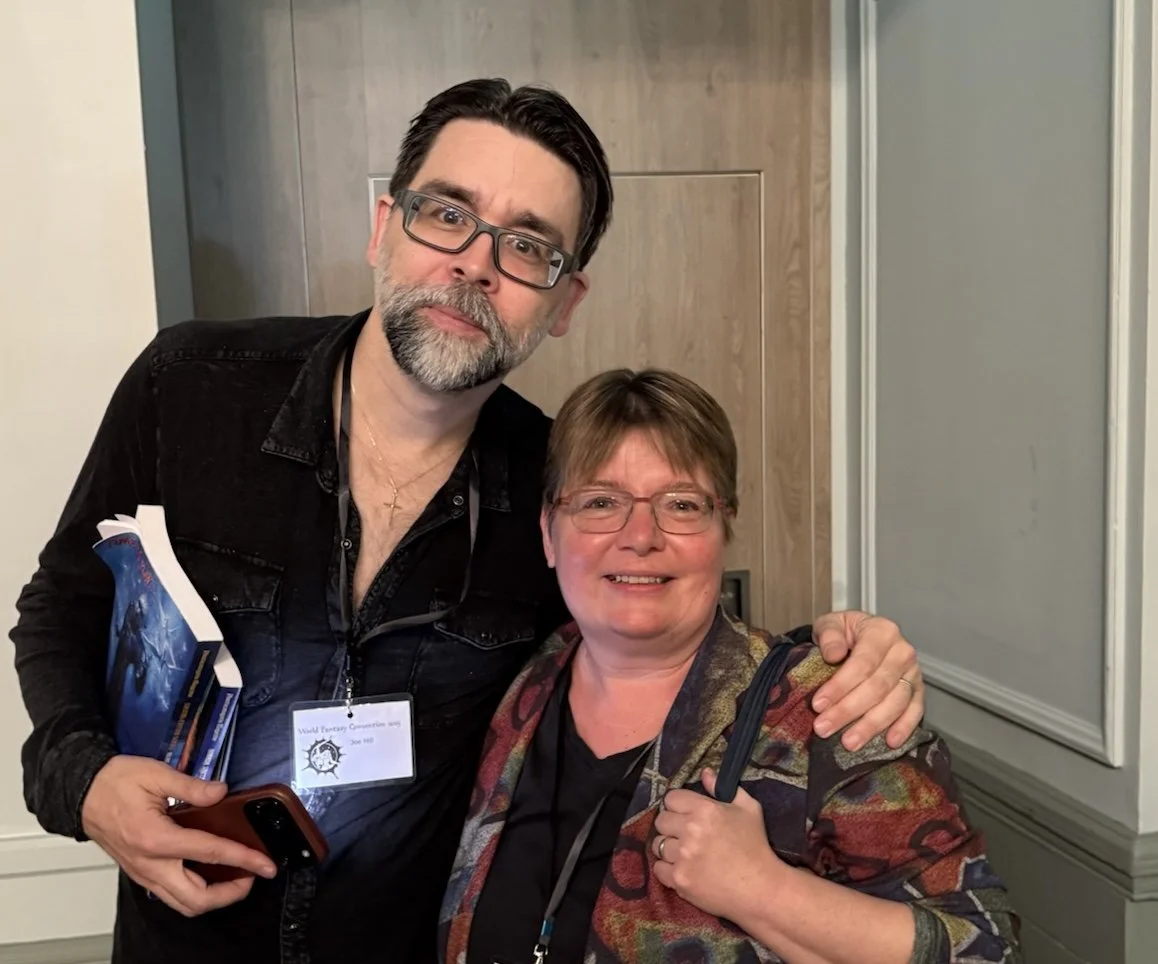
Thank you, Joe Hill!